Breast Cancer

What is Breast Cancer?

Breast cancer is the most common type of cancer among women in Singapore today.
1 in 12 women in Singapore is likely to develop breast cancer in their lifetime*.

National Registry of Diseases Office. (2024). Singapore Cancer Registry Annual Report 2023. ​

Signs and Symptoms

Ductal carcinoma in situ (DCIS) is a non-invasive, stage 0 form of breast cancer in which abnormal cells are confined to the milk ducts and have not spread into the surrounding breast tissue. DCIS generally does not cause any symptoms and is most often detected through screening mammograms. In some cases, women with DCIS may experience a breast lump or bloody nipple discharge. Breast cancer is generally painless, and there may be no noticeable symptoms in its early stages when the cancer first develops.

Causes and Risk Factors

The exact causes of breast cancer are not fully known, but certain risk factors can increase the likelihood of developing the disease. Some risk factors, such as gender, age and environmental factors, cannot be changed and are considered non-modifiable. Others are modifiable, as they are associated with lifestyle choices. Risk factors include:

Being a woman

Early onset of menstruation (before the age of 12) or late menopause (after the age of 55)

Never having children or having children later in life (after the age of 30)

Obesity, particularly excessive weight gain after menopause

Genetic factors and a family history of breast cancer

Cancer Prevention

There is no guaranteed way to prevent breast cancer, but the risk of developing it can be reduced by making healthy lifestyle choices and modifying risk factors within our control. These include:

Exercising regularly and increasing physical activity

Limiting alcohol intake

Maintaining a healthy diet and weight, particularly after menopause

Stopping smoking

Miting the use of hormone replacement therapy (HRT) and oral contraceptive pills (OCP)

Limiting exposure to environmental pollution and radiation

Mammography

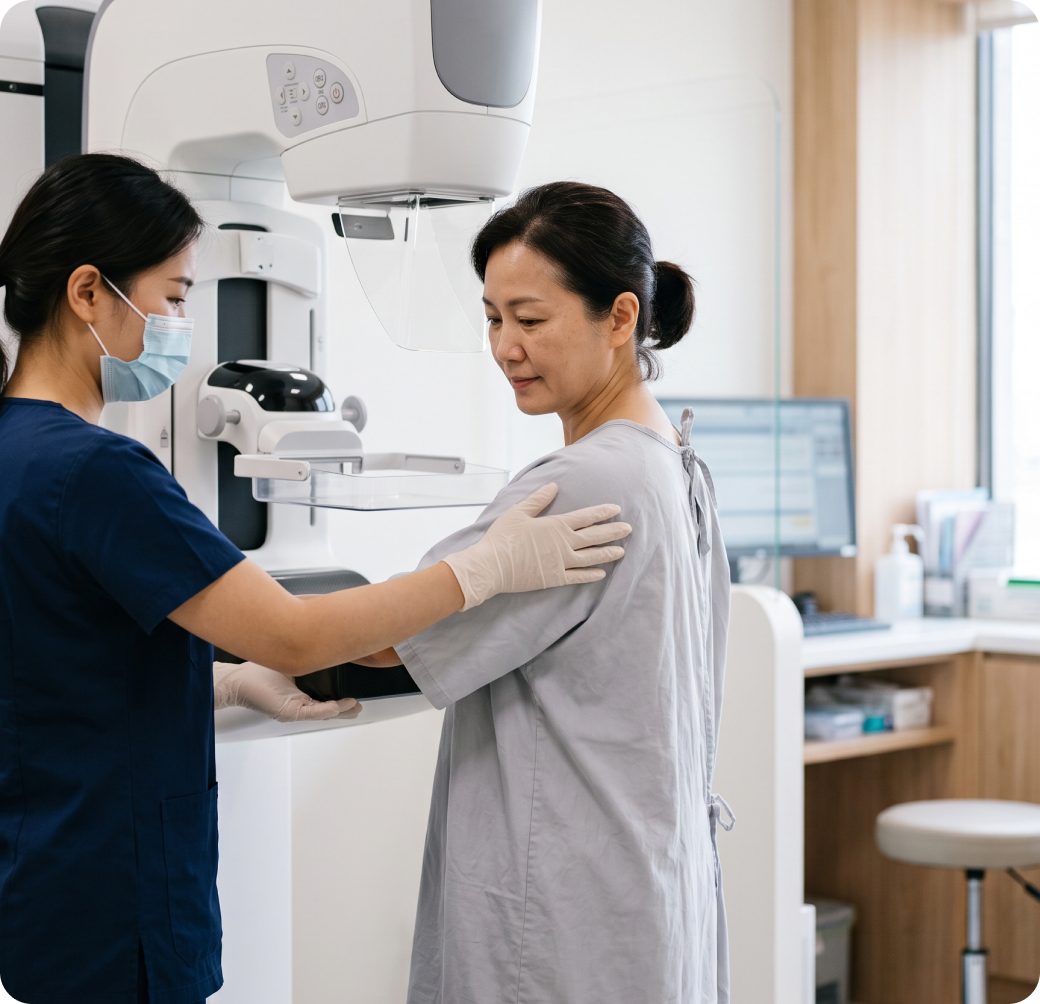
Regular mammograms are the most reliable way to detect breast cancer, even before the lumps are big enough to be felt. Mammography is a low-dose X-ray technique that produces images of the internal structures of the breast. During a standard screening mammogram, the breast is compressed between two plates while X-ray images are taken from two views, horizontal or diagonal. Additional angles or magnified views may be taken if any areas of concern are identified. Mammography can detect the presence and location of abnormalities and assist in diagnosing breast conditions, including cancer. Other imaging tests, such as breast ultrasound, tomosynthesis and MRI, are also available to assess the breasts. These are generally not used for routine screening , in women without symptoms. Instead, they may be used for further evaluation following an initial screening mammogram or considered for women who are at high risk of breast cancer. 

Breast Self-Examination (BSE)

Breast self-examination is recommended once a month, approximately one week after the first day of menstruation. For women who no longer menstruate, choosing a specific date each month can make it easier to remember. Note for changes in the breast, such as redness, swelling, a lump, skin changes or nipple discharge. Any changes should be reported to a doctor. Regular breast self-examination and being familiar with how your breasts normally look and feel can help you become more aware of any changes and identify abnormalities early.

Nourishing Every Step of Your Journey

You don’t have to navigate dietary complexities alone. Let us help you with sustainable nourishment.